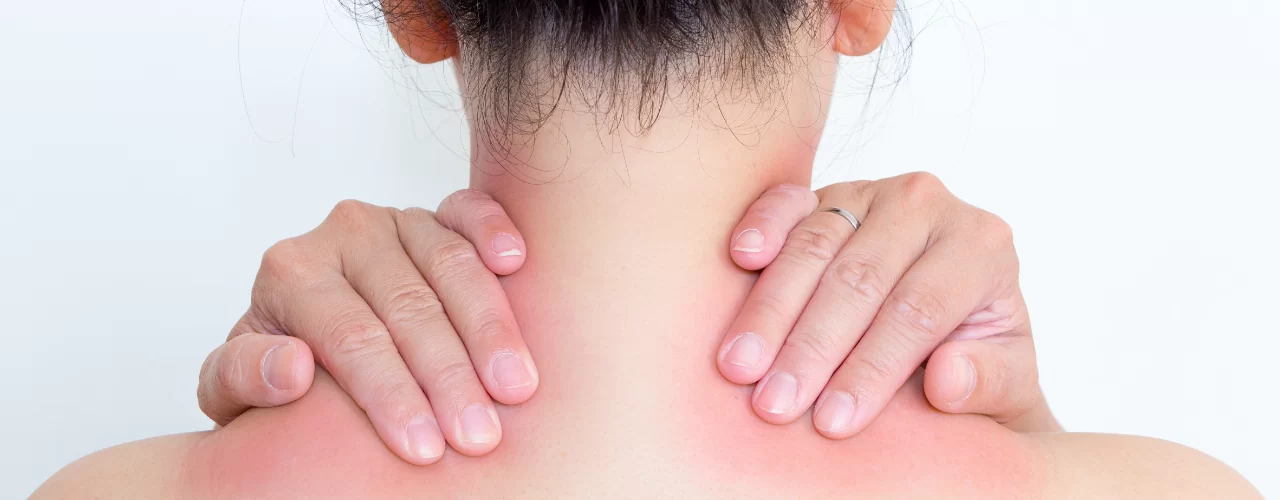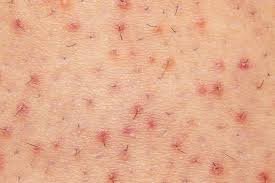
Infection or inflammation of hair follicles is known as folliculitis. Folliculitis can occur on any part of the body that has hair on it. The most common areas include the beard, scalp, chest, head, legs, back and arms. Folliculitis occurs due to the entry of a skin pathogen into a damaged hair follicle which leads to an infection. Damage to the hair follicles is usually caused by shaving, friction from clothing, skin condition like dermatitis (skin inflammation), or making tight braids. The main cause of folliculitis is an infection from the bacteria Staphylococcus Aureus. However, folliculitis may arise from fungal infection or inflammation from ingrown hair as well.
Homeopathy for folliculitis is very safe and highly effective. Homeopathic medicines fight the infection, reduce inflammation, aid healing of eruptions, clear the discharge, and cure the associated symptoms of itching, burning and pain. In mainstream medicine, ointments, gels and lotions are prescribed to fight bacterial infection. Though they give quick relief but the results are usually temporary. On the other hand, homeopathic medicines give long-term results though it may take some time, varying from weeks to a few months, depending on the intensity and chronicity of complaint.
Homeopathic medicines help to boost the body’s self-healing mechanism and fight the infection naturally in folliculitis cases. This results in a very safe, gentle healing in the most harmless manner. A complete course of homeopathic treatment needs to be followed as suggested by a homeopathic doctor to get rid of folliculitis completely.
Homeopathy gives remarkable results in cases of acute as well chronic cases of folliculitis. Initially, homeopathic medicines give relief in acute signs and symptoms of folliculitis. Afterwards, it works to gradually reduce the intensity and frequency of the complaint to overcome chronic tendency of folliculitis.
Homeopathic medicines for folliculitis treat the condition by following a curative approach rather than by suppressing it. This is because homeopathy does not use ointments that work superficially on skin surface; rather it recommends oral medicines that work internally in the body to root out the cause.
Homeopathy uses natural medicines for folliculitis. These medicines are made from natural substances and do not cause any side effects. These are safe to use among persons of all age groups.
Top 5 Homeopathic Medicines for Folliculitis
The best remedies for folliculitis include Sulphur, Hepar Sulph, Graphites Naturalis, Calcarea Sulphurica and Mezereum.
1. Sulphur – Top Grade Medicine for Folliculitis
Sulphur is an excellent treatment for folliculitis. It is useful in cases of folliculitis where there is itching and burning in the eruptions. The itching gets worse in warm conditions. It gets aggravated in the evening or at night. The skin is sensitive to air and washing. Sulphur works well for skin complaints suppressed by the use of ointments.
When to use Sulphur?
Sulphur is a leading medicine in homeopathy to manage folliculitis with itchy eruptions attended with burning sensation.
How to use Sulphur?
Sulphur actsmost wonderfully in 30C potency that can be taken once a day.
2. Hepar Sulph – For Folliculitis with Painful Pustular Eruptions
Hepar Sulph is one of the best remedies for folliculitis. The main symptom that points to the use of Hepar Sulph is painful pus-filled eruptions. These eruptions are very sensitive to touch and may have a burning and stinging sensation as well. Increased sweating may be present along with the above symptoms. The patient may also be sensitive to cold air.
When to use Hepar Sulph?
Use of Hepar Sulph is highly suggested to manage pus-filled eruptions, i.e. pustules in cases of folliculitis with burning stinging pain.
How to use Hepar Sulph?
It can be used in low 30C potency that can be taken once or twice a day. It can also be used in 200C potency but not more than once a day.
3. Graphites Naturalis – For Barber’s Itch
Graphites Naturalis is a good treatment for folliculitis, which affects the beard area. Scratching the eruptions may lead to the oozing of sticky fluid. An itching, burning and stinging sensation accompanies eruptions. The skin on the face may also be dry and rough. Hair fall from the beard may also occur.
When to use Graphites Naturalis?
It is a well indicated medicine for treating folliculitis in the beard area (called barber’s itch) when eruptions ooze out a sticky fluid.
How to use Graphites Naturalis?
It gives excellent results in 3X power. Graphites Naturalis 3X can be taken one or two times a day.
4. Calcarea Sulphurica – For Discharge of Pus or Blood from the Eruptions
Calcarea Sulphurica is one of the best remedies for folliculitis breakouts that ooze pus or blood. Yellow crusts may cover the eruptions, which are tender to touch. Calcarea Sulphurica is among the top-grade medicines for the treatment of suppurative conditions. It works to remove pus discharge and treats folliculitis wonderfully.
When to use Calcarea Sulphurica?
Calcarea Sulphurica should be considered when eruptions discharge pus and blood and are covered with yellow crusts.
How to use Calcarea Sulphurica?
Use of this medicine is usually preferred in 6X potency that can be utilised once or twice daily.
5. Mezereum – For Folliculitis on the Scalp
Mezereum is a very effective treatment for folliculitis on the scalp. In such cases, there are eruptions on the scalp that ooze pus or sticky discharge. Intolerable itching, which gets worse in warm conditions, is also noticed. In some cases, thick scabs get formed over the eruptions. There is excessive hair fall in addition to the above symptoms.
When to use Mezereum?
This medicine is highly suitable for treating scalp folliculitis with eruptions oozing sticky fluid or pus.
How to use Mezereum?
Mezereum 30C is recommended once a day or in cases of less severity once/twice a week only.
Signs and Symptoms of Folliculitis
In folliculitis, red-colored pimples, blisters or pustular eruptions appear on the skin. These eruptions form around the hair follicle. The blisters may rupture, ooze pus or blood, and form a crust over it. The surrounding skin may be red and inflamed. There may be itching, burning and pain of varying intensity.